What Documents to Rent in Qatar

A rental you like can disappear fast in Doha, Lusail, or The Pearl - not because the price changed, but because another applicant had their paperwork ready. If you are asking what documents rent Qatar usually requires, the short answer is this: most landlords and agents want proof of identity, proof of income or employment, and enough supporting documents to feel confident you can move in without delays.
The exact document set depends on the property, the landlord, and whether you are renting as an individual, a family, or a business. A studio leased directly by an owner may involve a simpler process than a family villa managed by a real estate company. Furnished units, company leases, and premium towers can also come with stricter screening.
What documents to rent in Qatar usually include
For most residential rentals in Qatar, you should expect to provide a valid Qatari ID if you already have one, or a passport copy if you are still relocating. Landlords commonly ask for a residence permit status update, visa copy, or employer letter if your ID is still being processed. They also often request salary proof, which may come as a salary certificate, recent payslips, or bank statements.
In many cases, you will also be asked for contact details, current address details, and a move-in timeline. Some landlords want post-dated checks, so they may ask for bank information or proof that you can issue the required payment schedule. Others may ask for a security deposit at the time of contract signing rather than additional documents.
That means the practical answer to what documents rent Qatar landlords ask for is not one fixed checklist. It is a core set of identity and financial documents, plus a few extras based on risk, property type, and payment terms.
Identity documents matter first
If you already live in Qatar, your QID is usually the first document requested. It confirms your identity and residency status and helps the landlord prepare the tenancy contract correctly. If you are an expat who has just arrived, a passport copy and visa copy may be accepted at the inquiry stage, but many landlords still prefer the final lease to be signed once your local documentation is in order.
This is where timing matters. Some tenants start searching before their residence process is completed, which is fine, but it can narrow your options. Certain owners are flexible if your employer can issue a strong confirmation letter. Others will not hold a property without a QID and immediate payment readiness.
If you are renting for your family, a landlord may also ask for spouse or dependent IDs, especially if the lease will reflect family occupancy. This is more common in compounds, larger apartments, and villas where occupancy rules are monitored closely.
If you are relocating and do not have a QID yet
You can still begin your search, but prepare for more back-and-forth. Keep a clear passport copy, visa copy, offer letter, and employer contact details ready. If your employer provides housing support, include that early. It can reassure landlords that your move is genuine and your income is stable.
Income and employment proof often decides approval
After identity, the next thing landlords want to see is your ability to pay rent consistently. In Qatar, this usually means a salary certificate or employment letter. Some landlords also ask for recent bank statements or payslips, especially for higher-value rentals.
If you work for a well-known company, approval may move faster because the landlord sees lower payment risk. If you are self-employed, on probation, or changing jobs, expect more questions. That does not mean rejection, but it does mean you should be ready with stronger supporting documents.
A typical employment proof package may include your company name, job title, salary, and contract status. If accommodation is covered or partly covered by your employer, that detail helps. For premium apartments and villas, some landlords use salary thresholds before they even schedule a viewing.
Self-employed tenants and freelancers
This is one of the most common gray areas. If you are not on a standard salary structure, prepare trade license documents, company registration papers, or bank statements that show stable income. Some landlords are open to this, especially if you can pay several months in advance. Others prefer salaried tenants because the process feels more straightforward.
Payment documents and lease readiness
In Qatar, rent payment terms vary. Some landlords ask for monthly payments, while others ask for quarterly, semiannual, or annual post-dated checks. Because of that, being document-ready also means being payment-ready.
You may be asked for a checkbook, bank confirmation, or immediate deposit once terms are agreed. This is less about bureaucracy and more about speed. In a competitive building, the tenant who can confirm documents and payment quickly usually has the advantage.
Always ask early about the payment structure. A unit that looks affordable on a monthly basis may still require multiple checks upfront. If that does not match your cash flow, it is better to know before you submit documents.
Additional documents some landlords may request
Not every landlord asks for the same extras, but several are common enough to keep ready. A marriage certificate may be requested for family housing in certain cases. Utility account details or prior tenancy history can come up for renewals or higher-end properties. Some agents may request a signed booking form before taking the unit off the market.
If the property is in a managed tower or compound, building management may also require tenant registration documents after lease signing. That can include copies of IDs, vehicle details for parking access, or occupant information for security records.
These requests are not always part of initial approval, but they can affect move-in timing. A lease can be signed quickly, yet handover may still pause if building registration is incomplete.
What documents rent Qatar businesses need
Commercial rentals usually require more paperwork than residential ones. If you are leasing office space, a shop, or another business unit, expect the landlord or property manager to ask for company registration documents, trade license copies, authorized signatory ID, and sometimes board authorization or a company stamp.
They may also request financial statements or proof of business activity, especially for long-term leases or prime retail locations. For new businesses, landlords often look closely at the strength of the company setup and the intended use of the space.
This is where many business tenants lose time. The property search may be simple, but the documentation chain can involve legal, finance, and operations teams. If you want a faster process, assign one person to gather all company papers before negotiations begin.
Common reasons rental paperwork gets delayed
Most rental delays are not caused by unusual legal problems. They come from incomplete files, unclear salary proof, ID mismatches, or slow payment confirmation. A tenant may send a passport copy but forget the visa page. Another may share bank statements without an employment letter, which leaves the landlord guessing.
There is also the issue of document format. Blurry scans, expired IDs, and old salary certificates create avoidable friction. If your documents are ready, current, and easy to read, the process feels much more efficient for everyone involved.
A second source of delay is misunderstanding what the landlord actually wants. Some ask for a reservation deposit before drafting the contract. Others want the contract signed first and checks submitted immediately after. Ask for the exact sequence so you can move without confusion.
How to prepare before you start viewing
The smartest move is to create a simple rental file before you contact agents or landlords. Keep digital copies of your QID or passport, visa or residence status, salary certificate, and bank statements in one folder. If you are renting with a spouse or through a company, include those documents too.
It also helps to know your non-document criteria in advance - budget, preferred area, furnishing status, parking needs, and move-in date. That way, you are not wasting time on units that do not fit your requirements or payment capacity. A faster search is usually a better negotiation position.
For high-intent renters using a marketplace like Malkiati, this matters even more. When you find the right apartment, villa, or commercial unit, the goal is not just to inquire. The goal is to be ready to secure it.
A practical final check before you apply
Before sending anything, confirm five details: which ID is acceptable, what income proof is required, how many checks are needed, how much the deposit is, and whether building registration adds extra paperwork. Those answers will tell you more than a generic checklist ever will.
Good rentals move quickly in Qatar, but paperwork does not have to slow you down. If your documents are current, organized, and matched to the type of property you want, you will spend less time chasing approvals and more time choosing the place that fits how you want to live or work.
- By Malkiati
Related Articles
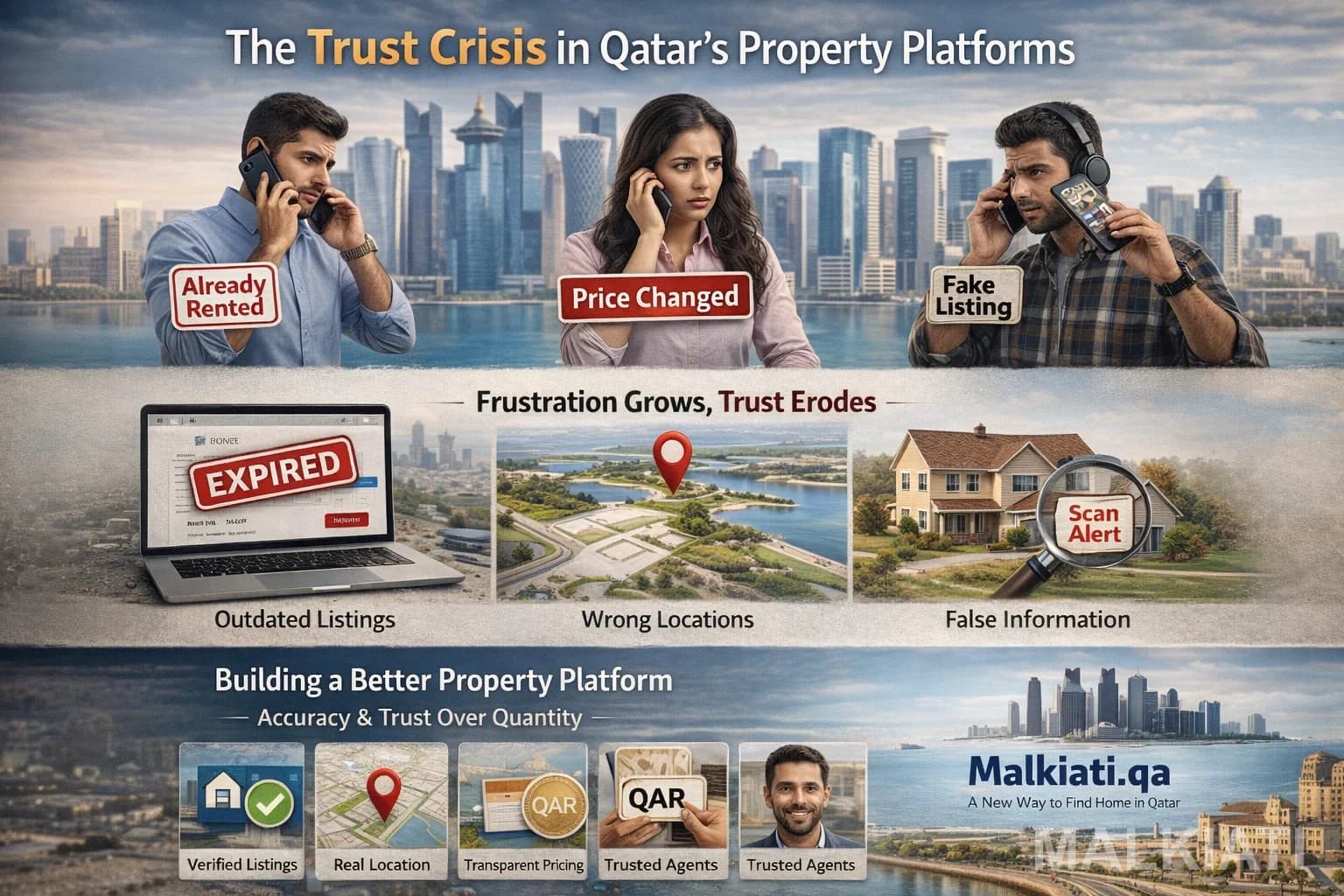 Market Insights & Trends
Why Trust Is the Real Missing Layer in Qatar’s Property Platforms
Searching for a home should be an exciting step.For many people in Qatar, it has become a ...
 Market Insights & Trends
Properties for Sale in Lusail Qatar: What to Know
Lusail is where many buyers in Qatar start when they want newer inventory, planned communi...
 Market Insights & Trends
Properties for Sale in Pearl Qatar: What to Know
The difference between a smart purchase and an expensive mismatch in The Pearl often comes...