Retail Shop Versus Warehouse Lease: Which Fits?
Compare a retail shop versus warehouse lease in Qatar by location, cost, access, fit-out needs, and operations to choose a space that supports growth well.
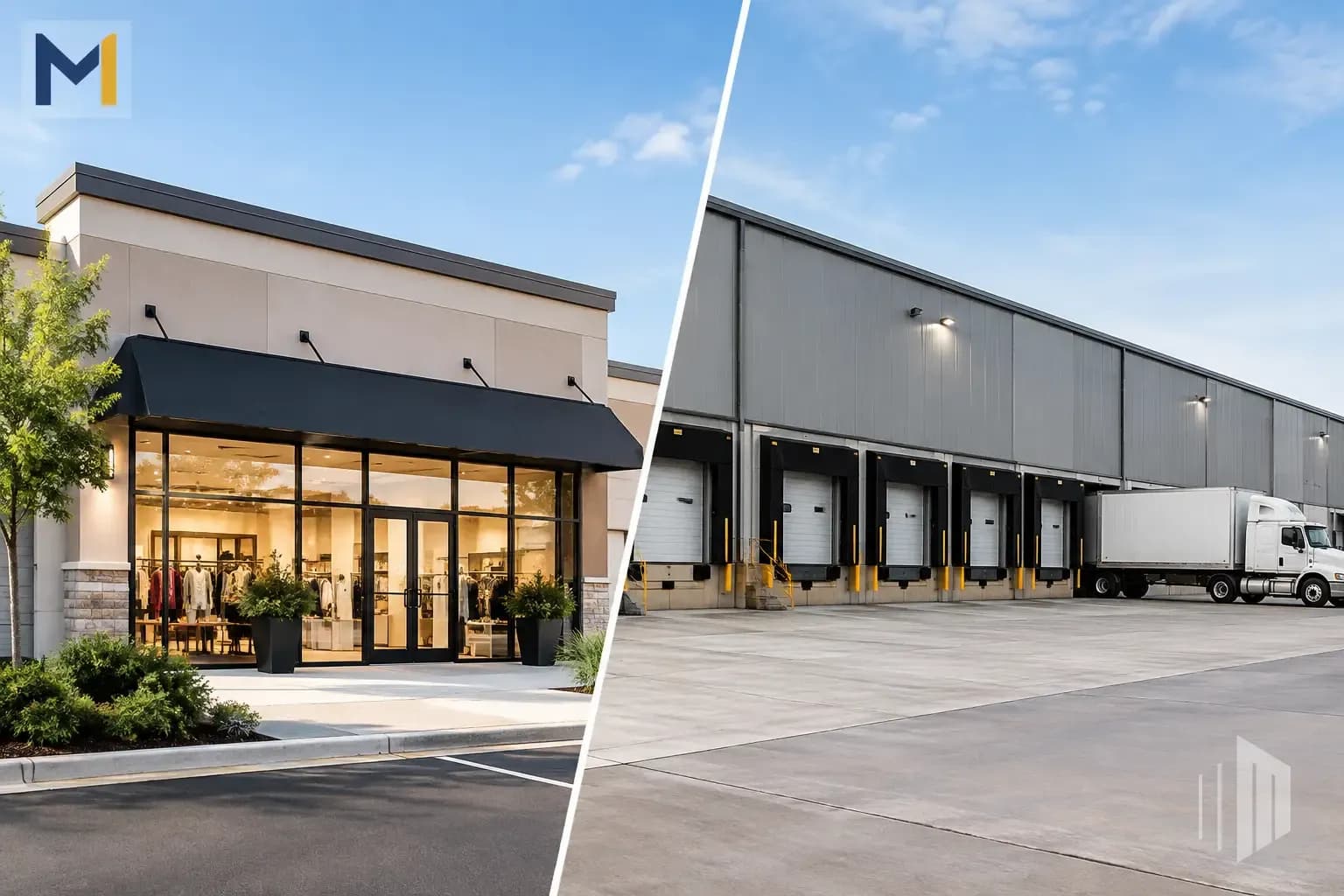
A retail shop versus warehouse lease is not simply a choice between two types of commercial space. It is a decision about how customers find you, how goods move through your business, how much you spend before opening, and what growth will look like over the next few years. The right property should support your daily operations, not force your team to work around it.
For businesses in Qatar, the best option depends on whether revenue relies primarily on walk-in customers, online orders, bulk inventory, delivery routes, production activity, or a combination of all four. A highly visible storefront in Doha can build trust and sales. A practical warehouse can protect margins and make fulfillment faster. The mistake is choosing based on rent alone.
Retail Shop Versus Warehouse Lease: Start With the Job
A retail shop is designed to be seen, entered, and experienced by customers. It suits businesses that depend on foot traffic, customer appointments, product displays, or a recognizable physical presence. Think salons, cafes, pharmacies, boutiques, mobile stores, service centers, and neighborhood convenience concepts.
A warehouse lease serves a different purpose. It prioritizes storage capacity, loading access, vehicle movement, operational efficiency, and often lower cost per square foot. It is a stronger fit for distributors, e-commerce sellers, importers, wholesalers, contractors, light assembly businesses, and companies carrying substantial stock.
The simplest question is this: where does the most valuable part of your work happen? If it happens at the counter, in front of a display, or during a customer consultation, retail space deserves serious consideration. If it happens at a loading bay, on shelving, through packing stations, or inside delivery vehicles, warehouse space is usually the better foundation.
Some businesses need both. A furniture retailer may need a customer-facing showroom plus off-site storage. A beauty brand may begin with a compact shop in a busy district while using a small warehouse for replenishment. Separating sales space from storage can reduce pressure on the storefront, but it also adds transportation, management, and lease costs.
What You Pay for Beyond the Monthly Rent
Retail rent reflects more than the unit itself. A shop in a high-demand location may provide visibility, pedestrian traffic, nearby complementary businesses, and stronger customer confidence. In districts such as Al Sadd, The Pearl, Lusail, and central Doha commercial areas, location can directly affect brand awareness and daily sales.
That visibility comes with trade-offs. Retail units may have higher rent per square foot, service charges, signage requirements, restricted operating hours, limited back-of-house space, and parking constraints. A small shop can also become expensive if it requires major interior work to meet your brand, licensing, or customer experience requirements.
Warehouse leases often offer more usable area for the price. However, the base rent is only one part of the operating cost. Check whether the property has sufficient electrical capacity, cooling, fire safety systems, drainage, security, office space, loading doors, and space for staff parking or delivery vehicles. Upgrading an older industrial unit can quickly change the economics of an apparently low-cost lease.
Before committing, build a realistic occupancy budget that includes rent, deposits, utility connections, fit-out, maintenance, insurance, licensing requirements, signage, security, cleaning, and moving costs. For a warehouse, add racking, forklifts or handling equipment, shelving, packing stations, and delivery access improvements. For a shop, account for displays, lighting, point-of-sale equipment, storefront branding, and customer-facing finishes.
A property that is ready to operate may be better value than a lower-rent unit that needs months of work.
Location Means Different Things for Shops and Warehouses
For retail, location is part of the product. The right site places your business near the customers most likely to buy. A coffee concept needs routine foot traffic. A specialty retailer may benefit from being near offices, residential towers, schools, or complementary stores. A premium showroom may prioritize image, accessibility, and convenient parking over sheer pedestrian volume.
Visit potential retail locations at several times of day. Morning, evening, weekends, and major traffic periods can tell very different stories. Look beyond the number of people passing by. Ask whether they match your likely customer, whether they can stop easily, and whether the storefront is visible from the road or walkway.
For a warehouse, location is about movement and reach. Assess travel time to ports, airports, supplier routes, major highways, customer zones, and delivery destinations. A facility near your inventory source may lower inbound transport costs. One closer to your customers may improve delivery speed and reduce last-mile expenses.
Also consider vehicle practicality. Can a truck enter, turn, load, and leave without causing delays? Are there restrictions on vehicle size or delivery times? Does the surrounding area become congested during peak hours? These details matter more to warehouse operations than an attractive frontage.
Fit-Out and Compliance Can Decide the Better Lease
A retail property may look ready on the first viewing, but suitability goes further than clean flooring and good lighting. Confirm that the unit can support your permitted business activity, required signage, customer seating if relevant, food preparation or extraction systems where needed, restroom access, and appropriate fire safety measures.
Warehouses need equally careful checks. Ceiling height affects racking capacity. Floor loading matters for heavy goods and equipment. Dock access affects receiving. Temperature control may be essential for food, cosmetics, electronics, or sensitive stock. If you plan light manufacturing, assembly, or packaging, verify the permitted use and available utilities before you sign.
Do not rely on verbal assurances about what can be changed. Put approved fit-out responsibilities, handover condition, repair obligations, and any landlord contributions in writing. Clarify who pays for approvals, what happens to improvements when the lease ends, and whether you must restore the unit to its original condition.
Choose a Lease Term That Matches Your Stage
A longer lease can secure a desirable shop location or give a growing operator stability in a warehouse. It may also provide more negotiating room for rent-free fit-out periods or landlord support. But a long commitment can become restrictive if your sales model changes, your inventory grows faster than expected, or a new location proves more practical.
For newer businesses, flexibility is often valuable. Consider whether the lease allows renewal options, expansion into adjacent units, assignment to another tenant, or an early exit arrangement. These terms may not feel urgent during the first viewing, but they can protect your business later.
Established retailers should be especially careful about renewal language. If your shop has built a loyal customer base at one address, losing that location can be costly. Warehouse tenants should focus on growth capacity and operational continuity. Moving stock, racking, systems, and staff is disruptive even when another unit offers better rent.
A Practical Way to Compare Shortlisted Properties
When comparing a retail shop and warehouse option, score each property against the same business priorities rather than relying on instinct. Use a simple comparison sheet covering these four areas:
- Revenue potential: customer access, visibility, local demand, and sales opportunity.
- Operating efficiency: storage, loading, deliveries, staff workflow, and parking.
- Total occupancy cost: rent, fit-out, utilities, charges, deposits, and maintenance.
- Future fit: lease flexibility, expansion room, permitted use, and location relevance.
A retail unit may score highest on revenue potential while a warehouse wins on cost and efficiency. That does not automatically make either choice correct. The property with the best overall score should reflect how your business earns money now and where you expect it to be when the lease comes up for renewal.
When searching commercial listings, filter for the operational details that affect your decision: size, parking, furnishing status, readiness, location, access, and price. Malkiati helps business owners compare commercial opportunities across Qatar and connect with verified market options without adding unnecessary friction to the search.
The best commercial lease gives your business room to serve customers well, move goods without delay, and control avoidable costs. Choose the space that makes your next working day easier, then make sure its lease terms still work for the business you plan to build.
- retail shop
- warehouse lease
- doha
- commercial rent
- qatar