Qatar Real Estate Trends to Watch in 2026

A one-bedroom in Lusail, a family villa in Al Waab, a fitted office in West Bay - the gap between "available" and "worth pursuing" is getting wider. That is why qatar real estate trends matter right now. The market is offering more choice, but better decisions depend on understanding where demand is moving, which property types are holding value, and how renters, buyers, and investors are changing their priorities.
For property seekers, this is no longer a market where broad assumptions work. Price alone is not enough. Location, building quality, parking, furnishing status, payment terms, and occupancy timelines are shaping decisions faster than before. For landlords, agents, and developers, visibility is still important, but relevance matters more. The listings getting attention are the ones that match how people actually want to live and work in Qatar.
Qatar real estate trends are becoming more location-specific
One of the clearest shifts in the market is that demand is no longer moving evenly across Doha and surrounding areas. Instead, each district is behaving more like its own micro-market.
The Pearl and Lusail continue to attract renters and buyers who prioritize lifestyle, newer stock, waterfront views, and managed communities. These areas often appeal to expatriate professionals, investors, and tenants who want amenities within the same development. But demand here is also more selective than many expect. A well-maintained apartment with parking, gym access, and clear availability can move quickly. A similar unit with weaker finishing or less competitive pricing can sit longer.
Established neighborhoods such as Al Sadd, Bin Mahmoud, Al Waab, and Abu Hamour remain important because they solve a different set of needs. They often offer stronger practical value for families, better access to schools or major roads, and a wider range of unit sizes. In these areas, tenants are often comparing based on space efficiency and everyday convenience rather than prestige alone.
That means a market snapshot for "Doha" is less useful than it used to be. Users are increasingly making side-by-side decisions at the neighborhood level.
Rental demand is staying active, but expectations are higher
Qatar remains a rental-driven market for a large share of residents, especially expatriates, relocating professionals, and younger tenants. Demand is still active, but renters are becoming more disciplined in what they will compromise on.
Furnishing status is a good example. Some tenants want fully furnished units because they need speed and flexibility. Others are actively filtering for unfurnished apartments to avoid paying a premium for furniture they do not need. The same goes for utility inclusion, parking allocation, balcony space, building amenities, and pet policies. Listings that clearly show these details are winning more serious inquiries because they reduce wasted time.
Budget sensitivity is also shaping behavior. That does not always mean tenants are choosing the cheapest option. More often, they are looking for clearer value. A slightly higher rent can still be attractive if the property offers stronger maintenance, easier access, better community features, or lower move-in friction.
For landlords, the message is simple. Competitive pricing still matters, but presentation and accuracy matter just as much. If the listing does not answer the practical questions first, many users move on.
Ready-to-move properties have an advantage
Occupancy timing is becoming a stronger filter. Many renters and buyers are working with tighter relocation schedules, school calendars, or business setup deadlines. Properties that are vacant, clearly available, and easy to inspect often have an edge over units with uncertain handover timing.
This is especially relevant in higher-volume apartment areas, where users may compare several similar options in a single search session. A ready unit with complete listing details can outperform a better property that requires too much follow-up.
Buyers are thinking beyond short-term pricing
Buyer activity in Qatar is influenced by a mix of end-user demand and investment interest. What is changing is the way buyers assess opportunity. There is still attention on pricing, but more buyers are asking whether a property will remain attractive over time.
That makes quality, community planning, and long-term livability more important than headline discounts. In areas with newer development pipelines, buyers are weighing current inventory against future competition. In mature locations, they are looking at whether the property has enough practical advantages to stay relevant.
This is where trade-offs become real. A buyer may choose a slightly smaller apartment in a stronger building if service quality and rental appeal are better. Another may accept an older unit in a proven location because the entry point is more favorable. There is no single right move. It depends on budget, intended hold period, and whether the purchase is for occupancy or income.
Branded and managed communities continue to stand out
Projects backed by known developers or stronger building management often hold attention for a reason. Buyers and tenants alike are looking for predictability. They want to know what maintenance standards look like, how common areas are handled, and whether the overall community experience supports the price.
That does not mean every independent property is at a disadvantage. It does mean unmanaged or poorly presented stock faces more resistance, especially when users can compare multiple listings quickly.
Commercial qatar real estate trends reflect practical business decisions
The commercial side of the market is also becoming more selective. Businesses looking for offices, retail shops, or mixed-use space are making decisions based on operational fit, not just square footage.
Location still leads, but accessibility, parking, frontage, fit-out readiness, and nearby business activity are increasingly important. A commercial unit in a visible area may still struggle if access is difficult or setup costs are too high. On the other hand, a smaller space with smart layout and immediate usability can attract stronger demand.
This is particularly true for small and mid-sized businesses. Many are prioritizing controlled overheads and faster launch timelines. They are asking practical questions first: Is the unit fitted? Is there customer parking? How quickly can operations start? Is the rent aligned with expected foot traffic or staff needs?
For commercial landlords, this changes how space should be marketed. Generic descriptions are less effective than specifics that help a business owner make a fast assessment.
Digital search behavior is reshaping the market
Another important shift is not about buildings at all. It is about how people search.
Users now expect to compare property types, neighborhoods, prices, furnishing options, and availability in one place. They want fewer blind inquiries and more immediate clarity. This behavior is pushing the market toward better listing quality, stronger filters, and more transparent agent or owner communication.
For serious property seekers, this is a benefit. A better digital search experience reduces friction and helps users identify whether a listing is realistic before making contact. For suppliers, it raises the standard. If photos are outdated, details are missing, or pricing feels disconnected from the market, users notice quickly.
That is part of why trusted marketplace models are gaining value. Platforms such as Malkiati help users sort through residential and commercial options more efficiently, especially when they want access to certified agents, direct owners, and a broad spread of listings across key Qatar locations.
What to watch next in qatar real estate trends
The next phase of the market will likely be defined less by dramatic swings and more by sharper segmentation. Better properties in better-matched locations should continue to perform. Average stock without clear value may need stronger pricing or improved presentation to compete.
For renters, that means acting quickly when the right fit appears, but not skipping practical checks. For buyers, it means looking beyond promotional language and testing whether the asset works in real market conditions. For landlords, developers, and agents, it means aligning listings with how people search now, not how they searched two years ago.
The strongest advantage in this market is not just access to more listings. It is knowing how to read them. When demand is selective and choices are wider, the best move is to focus on fit - the right property type, in the right location, with the right details already clear before you inquire.
- By Malkiati
Related Articles
 Market Insights & Trends
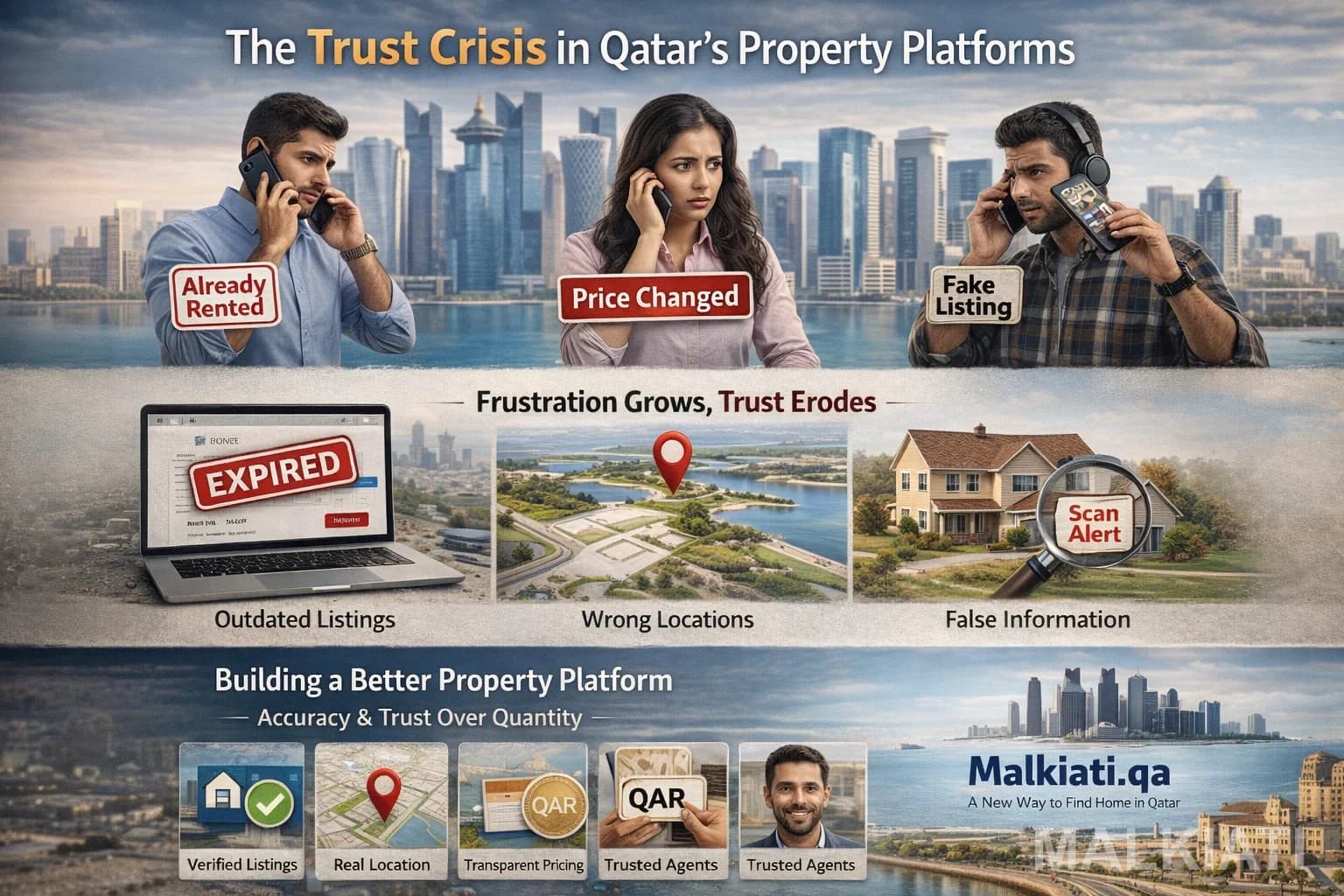
Why Trust Is the Real Missing Layer in Qatar’s Property Platforms
Searching for a home should be an exciting step.For many people in Qatar, it has become a ...
 Market Insights & Trends
Properties for Sale in Lusail Qatar: What to Know
Lusail is where many buyers in Qatar start when they want newer inventory, planned communi...
 Market Insights & Trends
Properties for Sale in Pearl Qatar: What to Know
The difference between a smart purchase and an expensive mismatch in The Pearl often comes...